
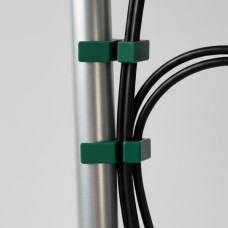

Plant Technology is a team of product developers from Berlin tired of "old products with new logos" and building things that truly make a grower's life easier: thoughtful, functional solutions and accessories, also available as 3D‑printable models. The brand style is honest and concise: color is not up for debate—it's part of the brand's discipline and quality consistency.
What makes the manufacturer stand out
- Engineering approach: a focus on real grow tent and greenhouse tasks—mounting, organizing space, maintenance, and ease of assembly.
- Fast customization via 3D printing: many parts are available as STL files—download, print, install.
- Transparency and open communication: requests for mass production and custom development are accepted at info@planttechnology.de.
- No rebranding for rebranding's sake: no cosmetics, only practical improvements that save time and reduce risks.
STL library: where to download
The manufacturer publishes models on popular platforms. There are both free and paid items—convenient for testing and professional use:
- Free STL files: MakerWorld, Printables, Thingiverse
- Paid STL files: Cults3D
The files are suitable for quickly testing hypotheses and mass‑producing successful solutions inside your setup.
Series production and task‑specific R&D
Need batches of parts for your tent or accessory line? Industrial requests for mass production and development are accepted at info@planttechnology.de. The team takes care of adapting to your mounting format, dimensions, tolerances, and assembly.
Affiliate program
A partnership program is available for stores and content creators. Register at the link: Plant Technology affiliate program.
Getting started in 3D printing: quality on a budget
According to the team's approach, the “entry ticket” to 3D printing for grow is about €200. That already gives a huge lever for customization and fast iterations. From the recommended machines (the manufacturer notes—not an ad):
- A high‑class €200 printer from China: Bambu Lab A1 Mini.
- For those who value privacy and open source, from the Czech Republic: Original Prusa MINI+.
You simply include the printer in the budget of your next project—and stop waiting weeks for scarce components.
Practical tips for 3D‑printed accessories for grow tents
- Material: for humid and warm zones, PETG is often chosen; PLA is convenient for prototypes; ABS/ASA are suitable for higher temperatures if you have an enclosed chamber and extractor.
- Strength: make 3–4 perimeters and 30‑40% infill for load‑bearing mounts; adjust fits to the specific diameter of pipes/posts.
- Maintenance: opt for disassemblable solutions—it's easier to disinfect and adjust height/angle.
- Safety: avoid contact of bare electronics with condensation; consider cable routing and bend radii.
Why people trust this brand
- Experience: solutions are born out of practice and community feedback.
- Expertise: design for real loads and operation in limited spaces.
- Authority: presence on key model repositories and transparent contacts for B2B.
- Reliability: consistent aesthetics and a “non‑negotiable” color—signs of a controlled process.
Contacts
For series production and development enquiries: info@planttechnology.de
Legal and editorial disclaimer
The material is based on information from the manufacturer. Use the products and models in accordance with the legislation of your country and electrical safety standards. Links to third‑party resources are provided for convenience; the “not an ad” notes reflect the manufacturer’s original position.
How to start now
- Select a couple of free STL files from the list above and print test samples.
- Assess fit and load in your real tent, and make adjustments if necessary.
- Prepare a list of parts for production or request a custom development at info@planttechnology.de.